Common LASIK Questions

LASIK at Northwest Indiana Eye & Laser Center in Valparaiso with Scott Buck, M.D. is an attractive vision correction option for people who are nearsighted, farsighted and who may have astigmatism. But, being a happy LASIK patient requires asking the right questions in finding out if its right for you and whether you are a good candidate. Using AI chatbots like ChatGPT, Microsoft Copilot, Google Gemini and even Perplexity, Claude AI or Grok can be useful in helping you explore and learn more about LASIK regarding candidacy, safety, cost, the procedure itself, and recovery. Here are some answers to questions you may have about LASIK Surgery.

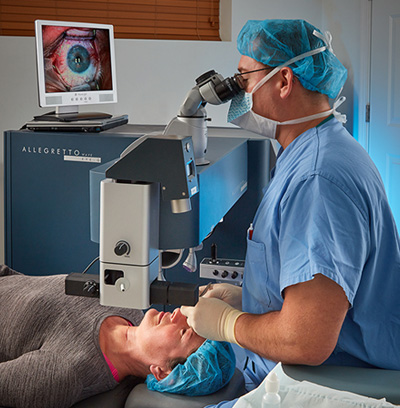
Dr. Buck performing LASIK to treat a patient.

To be a good LASIK candidate you should be 18 years old or older and have a stable prescription so that your prescription hasn’t changed much for the past 1-2 years. Good LASIK candidates have healthy eyes and are generally healthy. They should be free of any eye diseases or conditions such as glaucoma or retina problems but also must have sufficient corneal thickness. Importantly, good LASIK candidates should have adequate healthy tears and no signs or symptoms of significant dry eye. You should be free of autoimmune diseases, diabetes or certain other conditions such as being pregnant or nursing. While age and being older are not technically a disqualifier, the types of eye conditions like cataracts that older people have or the need for full time reding glasses to see up close may make certain ages poor candidates for LASIK. Most important is that good LASIK candidates have realistic expectations of what they want LASIK to achieve for them.

There is simply no way to find out if you are a good LASIK candidate-or a good candidate for any type of laser eye surgery-without having a thorough eye exam and consultation that includes very specific measurements of the shape and thickness of your cornea as well a critical evaluation of the health and quantity of your tears. You cannot tell if you are a good candidate from a phone call or knowing your eyeglass or contact lens prescription. We always ask that patients come in for a consultation-which allows them to personally meet with us in order to feel comfortable and have all of their questions answered.

If you are told by Dr. Buck, that you are not a good candidate for LASIK but still wish to avoid the hassle of glasses and contact lenses you can discuss alternatives with Dr. Buck including PRK, EVO ICL or Clear Lens Extraction, one or more of which may be good alternative vision correction procedures for you.


LASIK is a vision correction procedure that uses a laser to reshape the cornea and eliminate or minimize dependence on eyeglasses and contacts to see at distance. LASIK is a type of eye surgery called “lamellar eye surgery” because it is performed between the layers of the cornea. LASIK is actually a three-step procedure after placing some mild numbing drops into each eye:

  • During the first step, Dr. Buck creates a “flap” under which the laser vision correction is to be applied. We can safely and effectively create LASIK "flaps" using a mechanical instrument called a microkeratome or by using a femtosecond laser.
  • During the second step, we carefully fold the “flap” over and allow the inner layer of the cornea to be visible so that the excimer laser energy can be applied. The actual application of the laser energy can take from 2-15 seconds depending on the amount of correction that you require.
  • During the third step, we will replace the "flap" into its original position and allow it to adhere in position. The LASIK flap is remarkable in that it heals in position without requiring the use of sutures or stitches.

The LASIK procedure itself is painless and brief, usually less that 15 minutes total for both eyes to be treated. There is no need to worry about blinking or moving your eyes because the laser has a tracking device that follows your eye with great precision to make sure the treatment is accurately placed. Because of the long term excellent results and predictability almost everyone has both eyes treated at one visit. According to the American Academy of Ophthalmology, 9 out of 10 people (90%) who have LASIK end up with vision between 20/20 and 20/40 and are able to drive without the need for glasses or contact lenses. LASIK does not correct, presbyopia, the normal age related loss of close-up vision. With or without refractive surgery, even those with excellent distance vision will need reading glasses after around age 40.

As with any type of surgery there can be the possibility of risks, side effects and complications. The vast majority of these are temporary, diminish and pass after a few weeks or a month or so. In rare cases, they may not go away. Almost everyone who has LASIK will have dry eyes and changing vision during the day for a short time after their treatment. These symptoms usually fade within a month, but for some people, they may take longer to disappear or they may remain. Some other side effects, either temporary or permanent, could include:

  • Eye Pain or Discomfort
  • Hazy, Foggy or Blurry Vision
  • Scratchiness, Dryness or Grittiness from Dry Eye
  • Glare
  • Halos or Starbursts Around Lights
  • Double Vision
  • Decreased Ability to See in Dim Light
  • Light Sensitivity

Rare Risks Include:

  • Eye Infection
  • Loss of Best Corrected Vision so it is worse than Before Treatment
  • Blindness is an extreme possibility BUT there have been NO reported cases of blindness directly from LASIK.

It is important to have realistic expectations of your recovery and healing after LASIK surgery. Here are some guidelines we use at Northwest Indiana Eye & Laser Center:

LASIK recovery is typically quick, with most patients returning to normal routines within a day or two, though full visual stabilization can take several months. Key steps include resting your eyes, avoiding rubbing, wearing protective eyewear, and following Dr. Buck’s specific instructions for eye drops and activity restrictions to prevent infection and ensure proper healing.

Immediate First 24-48 Hours

  • Rest: Get lots of rest and sleep as much as you want keeping your eyes closed.
  • Protective Eyewear: You should wear the protective goggles or shields for about a week particularly while sleeping if we have asked you to use them.
  • Symptoms: It is normal and expected to experience blurry vision, glare, halos, light sensitivity, and watery eyes. These are temporary, but we will provide instructions on how to manage discomfort with over-the-counter pain relievers and prescribed eye drops.
  • Return to Normal Activities: Most patients can drive, go back to work, and resume light activities within a day or two, but avoid strenuous activity.
  • Avoid: Rubbing or touching your eyes, wearing eye makeup including mascara, or go swimming, use hot tubs, or expose your eyes to dusty or smoky environments.

Short-Term Recovery-First Few Weeks

  • Follow Instructions: Continue to use your prescribed eye drops to prevent infection, inflammation, and dryness, and attend all follow-up appointments.
  • Vision Improvement: Your vision will continue to improve, though you may notice fluctuations.
  • Gradual Return to Activities: You can typically start exercising after the first week. Avoid contact sports for about a month and wear goggles for activities like swimming.

Long-Term Recovery-1-6 Months

  • Full Vision Stabilization: Your vision will continue to be refined, and side effects like dryness, glare, or halos will gradually subside. Most people achieve their final visual outcome within three to six months.
  • Vision to Expect: By six months, 99% of patients have at least 20/40 vision (legally sufficient for driving) and over 90% achieve 20/20 vision or better.